Commercial Wedding Tents: A Buyer’s Guide to Styles, Costs, and Ownership

Let me tell you a secret about outdoor weddings: Mother Nature does not care about your Pinterest board. You can spend twelve months curating the perfect al fresco dining experience, but when the radar shows a dark green storm cell heading straight for your zip code at 4:00 PM, panic sets in. I have been there. I have watched stressed planners pacing on lawns, praying the rain holds off. The only thing standing between a soaked reception and a legendary party is the roof you put over it.

Quick Answer: What is a wedding tent?

A wedding tent is a heavy-duty architectural structure designed to protect outdoor events from weather while providing a customizable venue space. Commercial variants use robust aluminum frames and weather-resistant PVC, offering a reliable foundation for heavy lighting, climate control, and elaborate floral installations.
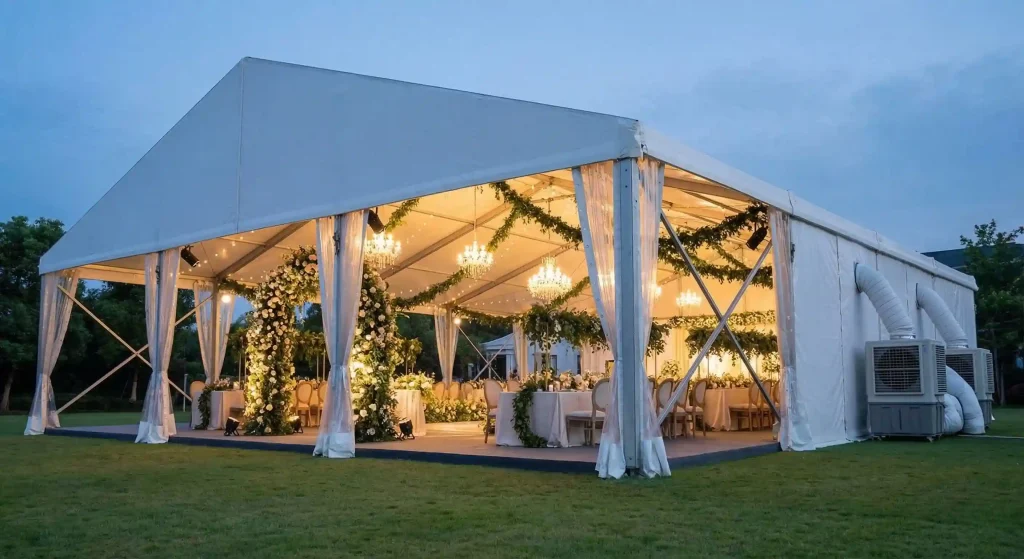
Clear span event tent with elegant wedding decor and external HVAC climate control units.


The Aesthetic Reality: Finding the Right Vibe for an Outdoor Tent Wedding

I’ve built everything from intimate backyard setups over swimming pools to massive festival-style pavilions in open fields. The structure you choose dictates the entire logistics plan for the week of the wedding.
  • The Clear Span Structure: This is the heavy lifter of the industry. There are no center poles. It’s essentially a temporary building. You get a completely unobstructed interior, which is exactly why high-end designers prefer them. You can hang massive floral chandeliers right over the dance floor without worrying about weight limits.
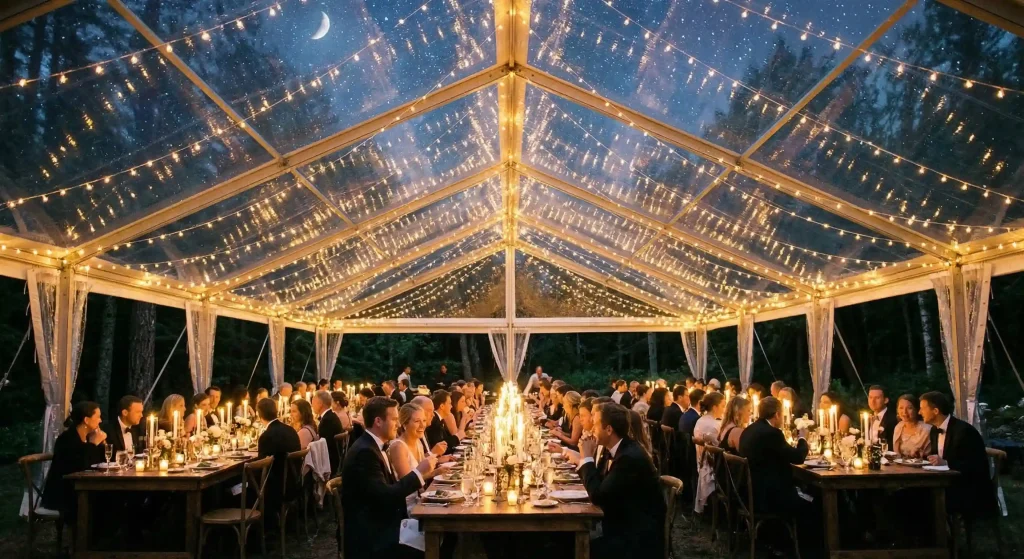
  • The Clear Tent Wedding: Transparent tents are currently very popular, allowing guests to dine under the stars. If you want this airy yet comfortable effect, our company, “Shoulder Tent,” can provide air conditioning, chairs, and other related wedding accessories. We can also design draperies for you. We can create a truly beautiful wedding experience.Guests dining inside a clear roof clear span tent illuminated by string lights.

The Financial Truth: Navigating Wedding Tent Rental Cost

Clients constantly get sticker shock when they see the quote for a structure. They ask, “Why does a wedding tent rental cost as much as an indoor venue?”

The answer is simple: the standard rental process is a massive logistical undertaking. You’re paying for much more than just a canvas canopy. The answer is simple: the standard rental process involves a lot of logistics. You’re paying for much more than just a canvas tarpaulin. There are shipping costs, labor costs for dismantling and reassembling equipment, and so on.

For a one-time bride, paying that rental fee makes sense. But what if you are the venue owner or event planner signing those rental checks over and over again? You are bleeding profit to build someone else’s asset.

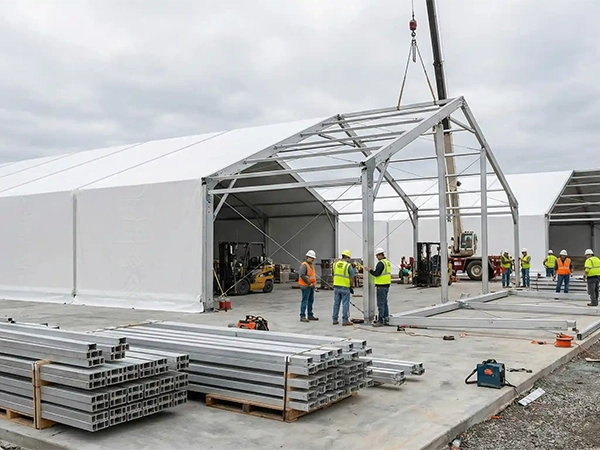
This is exactly why savvy professionals stop renting and start purchasing high-quality clear span tents directly from a manufacturer like Shoulder Tent. You aren’t just buying equipment; you are acquiring the modular framework of a five-star banquet hall. The brilliance lies in the engineering: these tents are assembled in 5-meter bays. Need to host a dinner for 100 people? Build four bays. Client adds 50 guests at the last minute? Just slide in two more roof panels and extend the aluminum tracks. Even with this scalable, plug-and-play assembly, you are deploying a rock-solid structure that withstands 60 mph gusts and seamlessly integrates with raised scaffolding, transforming a rugged pasture into a perfectly flat dining area overnight.

Why Venues and Planners Are Searching for Wedding Tents for Sale

If you run a historic estate venue, a winery, or an event production business, continuously sub-renting structures is draining your profit margins. You are paying off someone else’s asset.

I tell business owners this all the time:
if your venue hosts more than five outdoor weddings a season, or if your rental business is turning away clients because you lack inventory, you need to buy a wedding tent. Partnering directly with a premium manufacturer like Shoulder Tent means you acquire commercial-grade, engineered structures at wholesale pricing. You stop paying rental fees and start charging them. A solid 20×40 clear span tent can easily pay for itself in a single busy wedding season.

Buying vs. Renting: The ROI Breakdown

Here is the exact data I share with venues and rental businesses deciding whether to pull the trigger on their own inventory.
FactorBuying (for Rental Businesses/Venues)Renting (per Event)
Upfront CostSignificant initial capital investment.Lower, single-event fee.
Long-Term ROIPays for itself in 5-8 rentals. Pure profit afterward.Zero equity. It is a continuous, sunken expense.
CustomizationYou choose the exact dimensions, branding, and wall configurations.You are limited to whatever the local supplier has left in stock.
Labor & StorageRequires dedicated storage space, a wash rack, and an installation crew.Zero hassle. The rental company handles delivery, setup, and strike.
ReliabilityGuaranteed availability for your peak-season October dates.High risk of inventory shortages during the busy season.

Sizing Matters: From a Backyard Tent Wedding to a Large Wedding Tent

Cramming 200 people into a structure built for 100 is a recipe for a sticky, miserable night. Conversely, if you put 50 people in a massive pavilion, the party feels empty and the dance floor energy dies. Space planning requires real math.
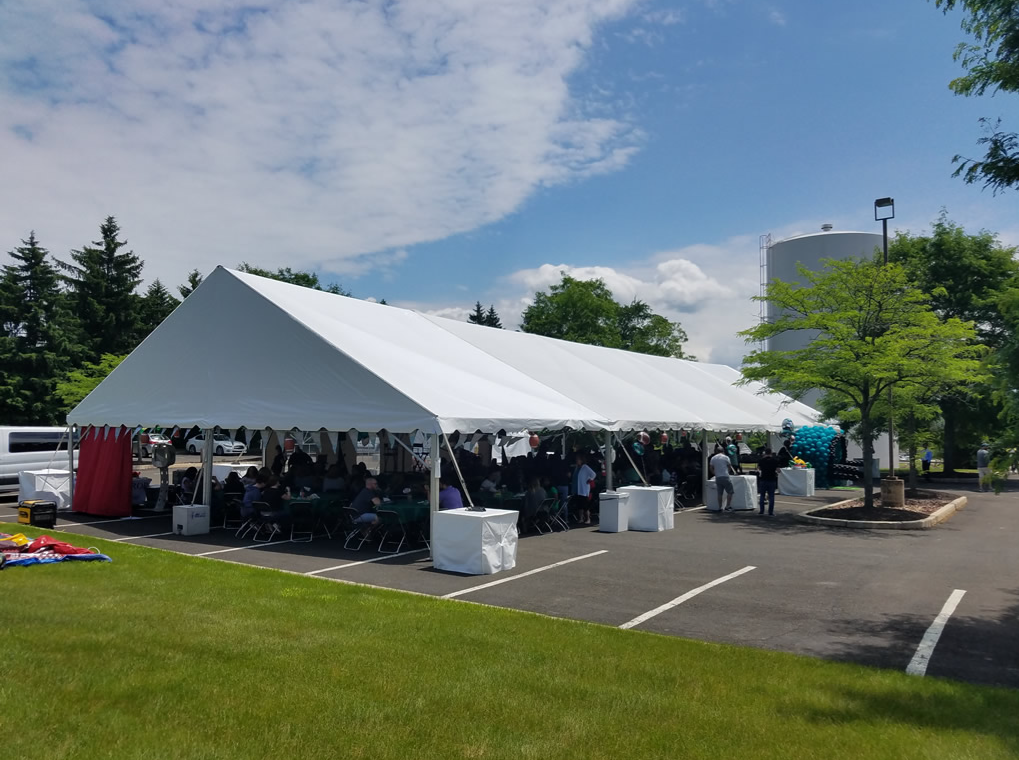
  • The Backyard Setup: A backyard tent wedding usually maxes out around 50 to 75 guests. You need roughly 15 to 18 square feet per person for a basic seated dinner. But don’t forget the catering tent! Your chef needs a separate 10×10 pop-up out back to prep the food—do not make them plate dinners in the main dining space.
  • The High-End Production: For a large wedding tent hosting 250+ guests, you have to account for the “invisible” footprint. A 16×16 foot dance floor, an elevated stage for an 8-piece band, three separate bars, and lounge furniture all eat up square footage rapidly. My rule of thumb? Calculate your seating space, then add 20% for flow.
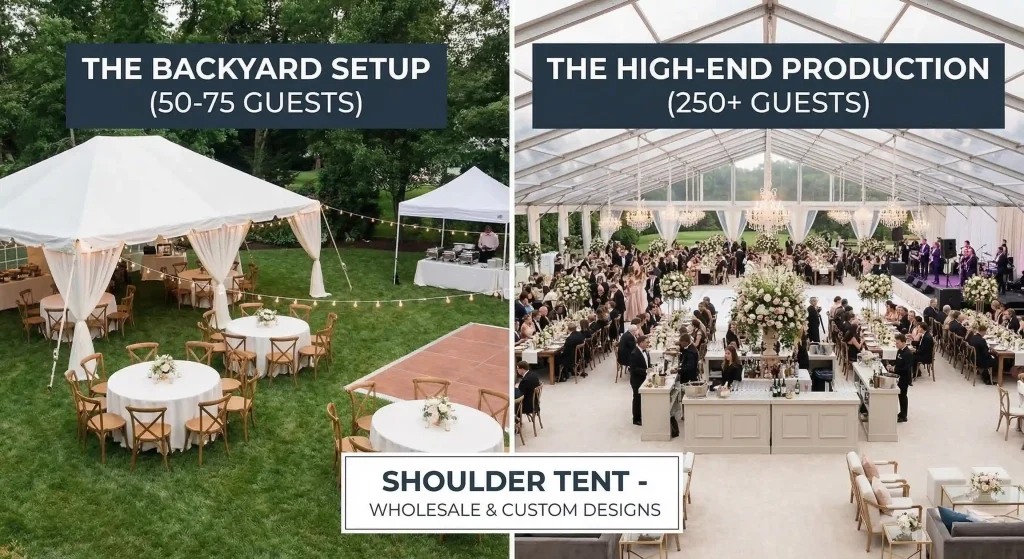
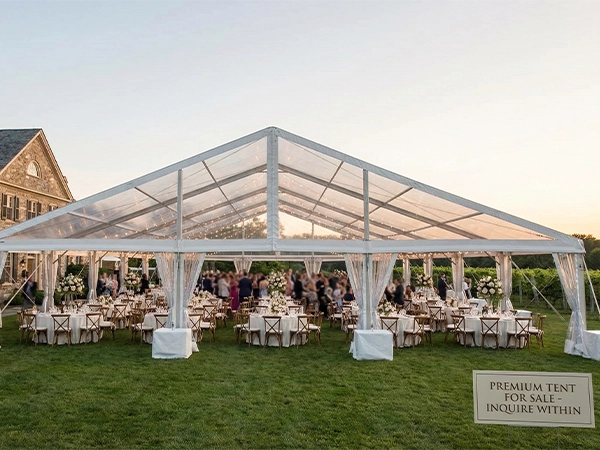
If you are a venue needing a permanent, elegant structure to guarantee weather-proof bookings, contact Shoulder Tent for wholesale pricing and custom designs. Stop padding another company’s bottom line and start building your own asset library.Side-by-side view of a basic backyard tent and a high-end clear roof event tent.
FAQ
Q1:How much wind can a commercial wedding tent actually handle?

Unlike those flimsy pop-up canopies you buy at a hardware store, professional clear span tents from manufacturers like Shoulder Tent are heavily engineered. When properly staked or weighted with concrete, these structures can typically handle sustained winds of 50 to 70 mph. The frame will not buckle, and the roof stays intact.

Q2:Do I really need to pay for a tent floor?

If you are setting up on a perfectly flat, manicured golf course and the forecast guarantees zero rain for a week, you might get away with leaving it out. But if there is even a 10% chance of rain, the ground will soften. A proper sub-floor (like Dura-Trac) keeps tables perfectly level, protects expensive shoes, and prevents your elegant venue from turning into a swamp by midnight.

Q3:Can I set up a tent on concrete?

Yes, but you cannot use traditional steel stakes. We have to use massive concrete weights (ballast) or water barrels to secure the tent. This requires heavy machinery like a forklift, which will increase the setup time and the overall cost.
Facebook
LinkedIn
Twitter
Email

Get a Quote

Newsletter

Subscribe to our Newsletter & Event right now to be updated.

Table of Contents